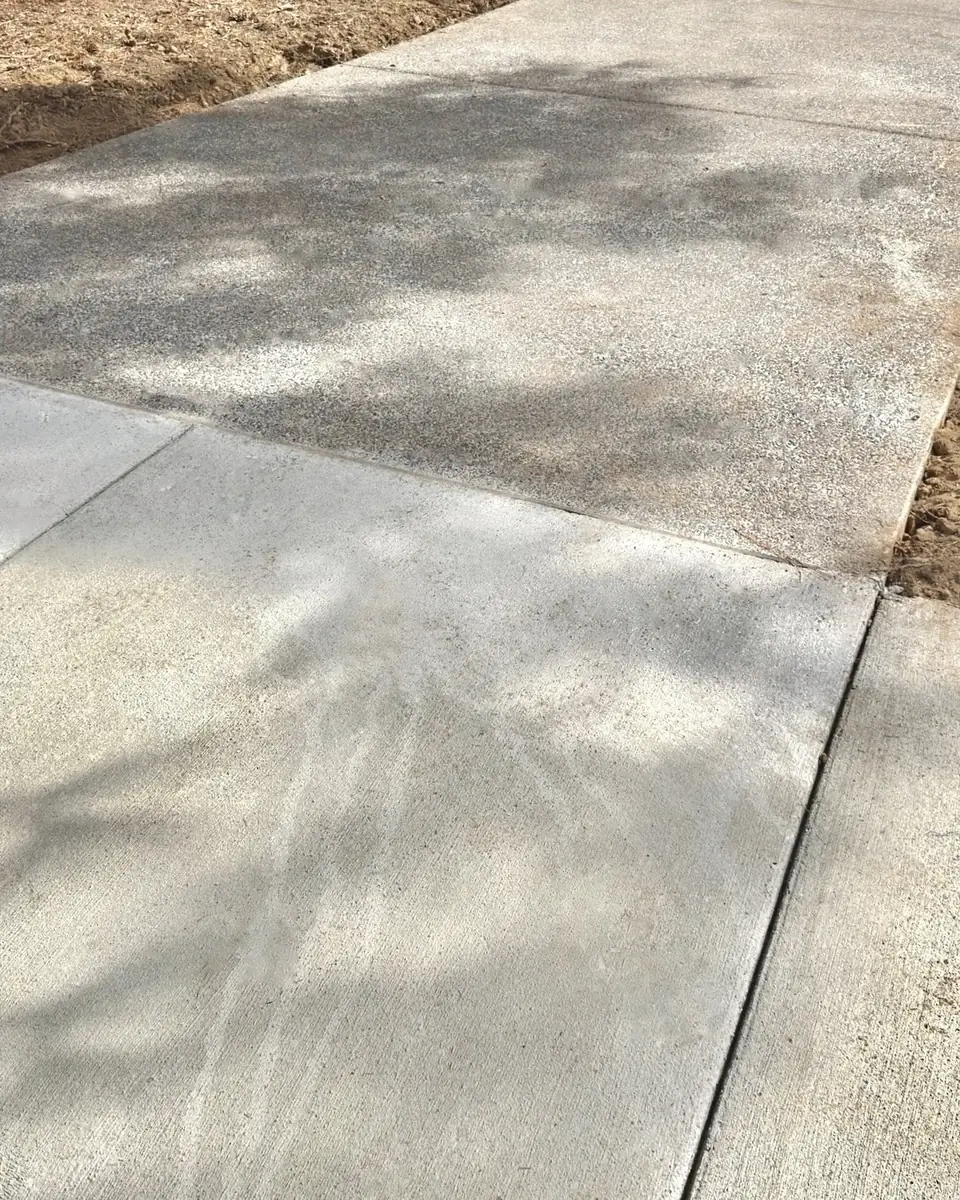
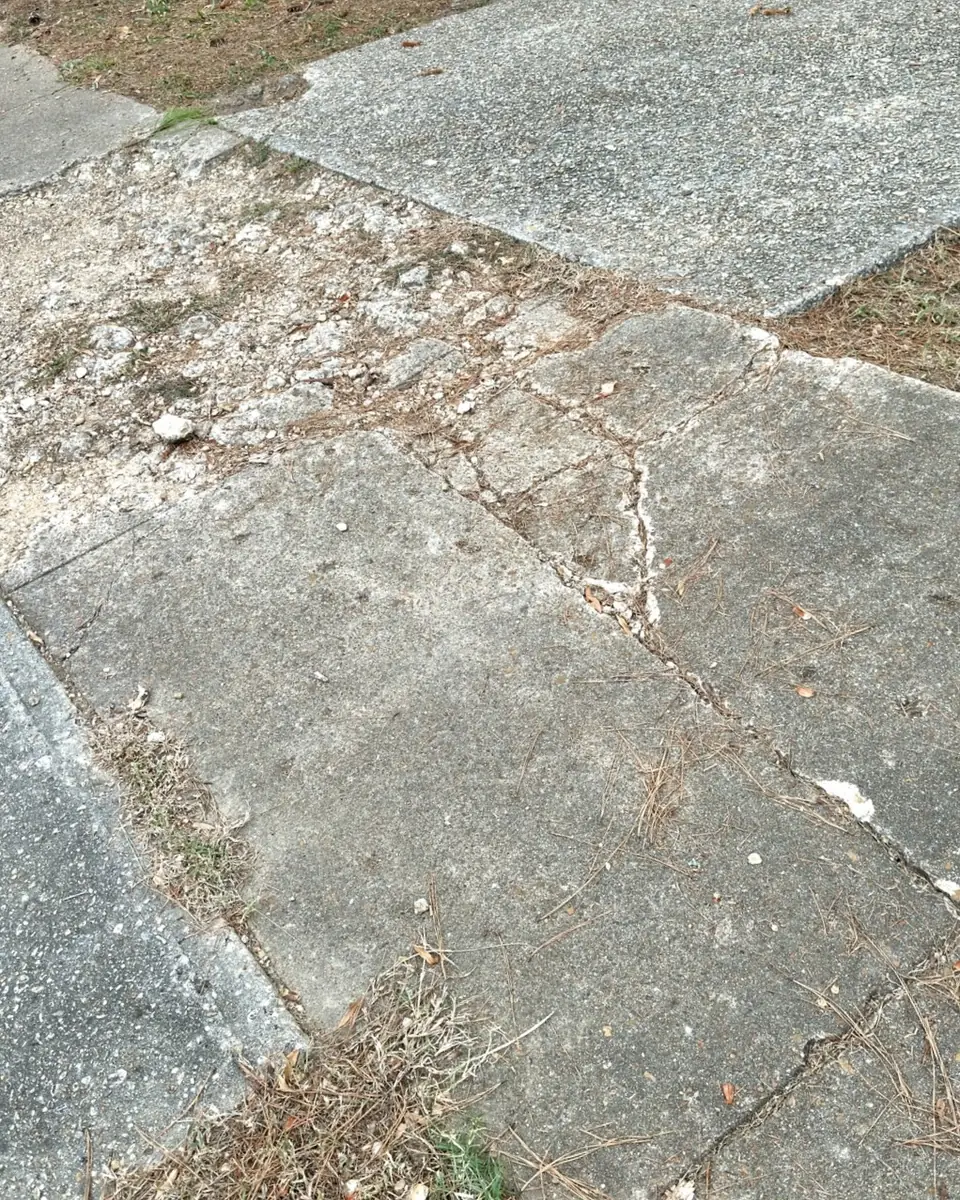
Why sidewalks heave and crack
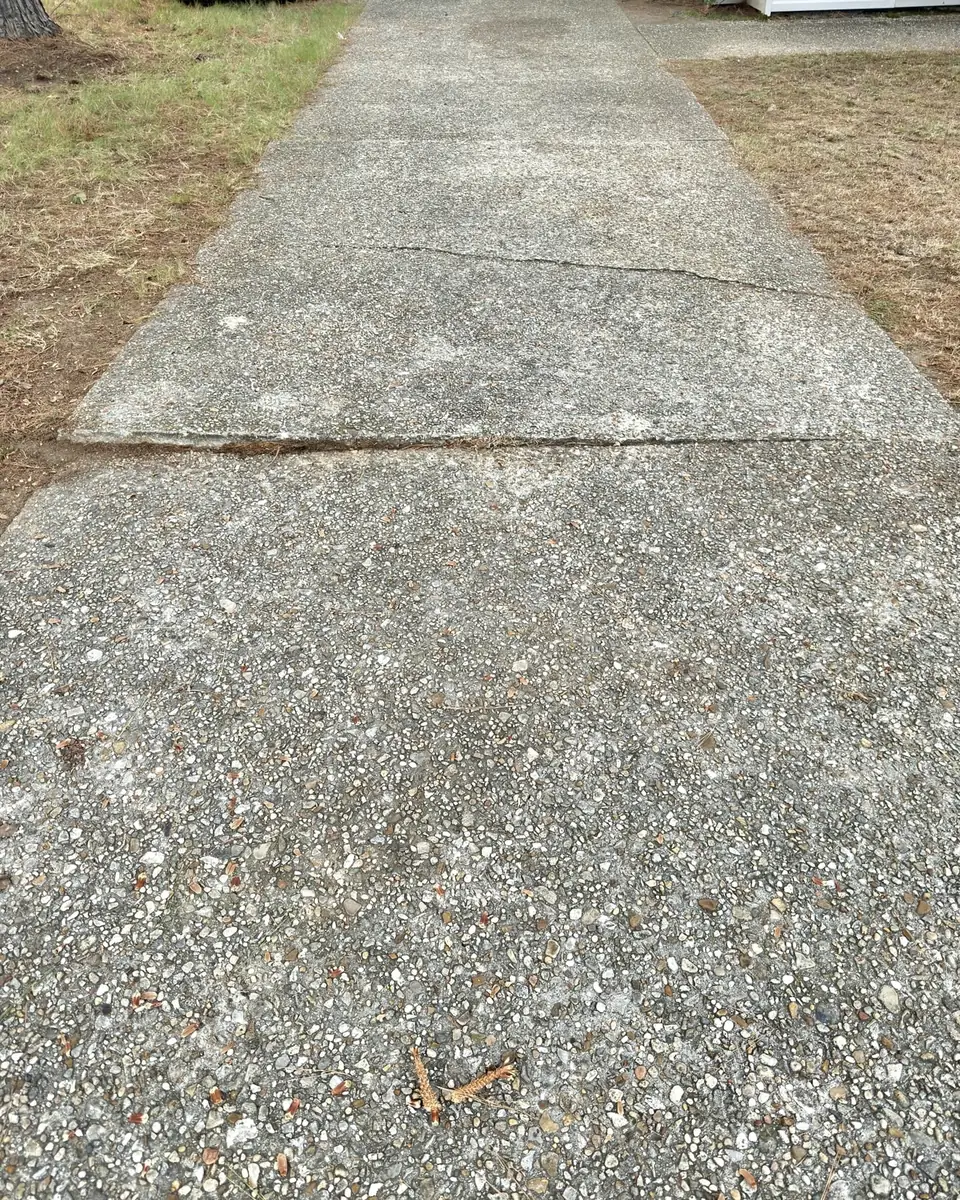
Tree roots are the usual culprit. Memphis neighborhoods are full of mature street trees, and their roots lift sidewalk panels until the edges no longer line up. Clay soil that swells and settles with the seasons does the rest, leaving tilted panels, wide cracks and loose pieces.
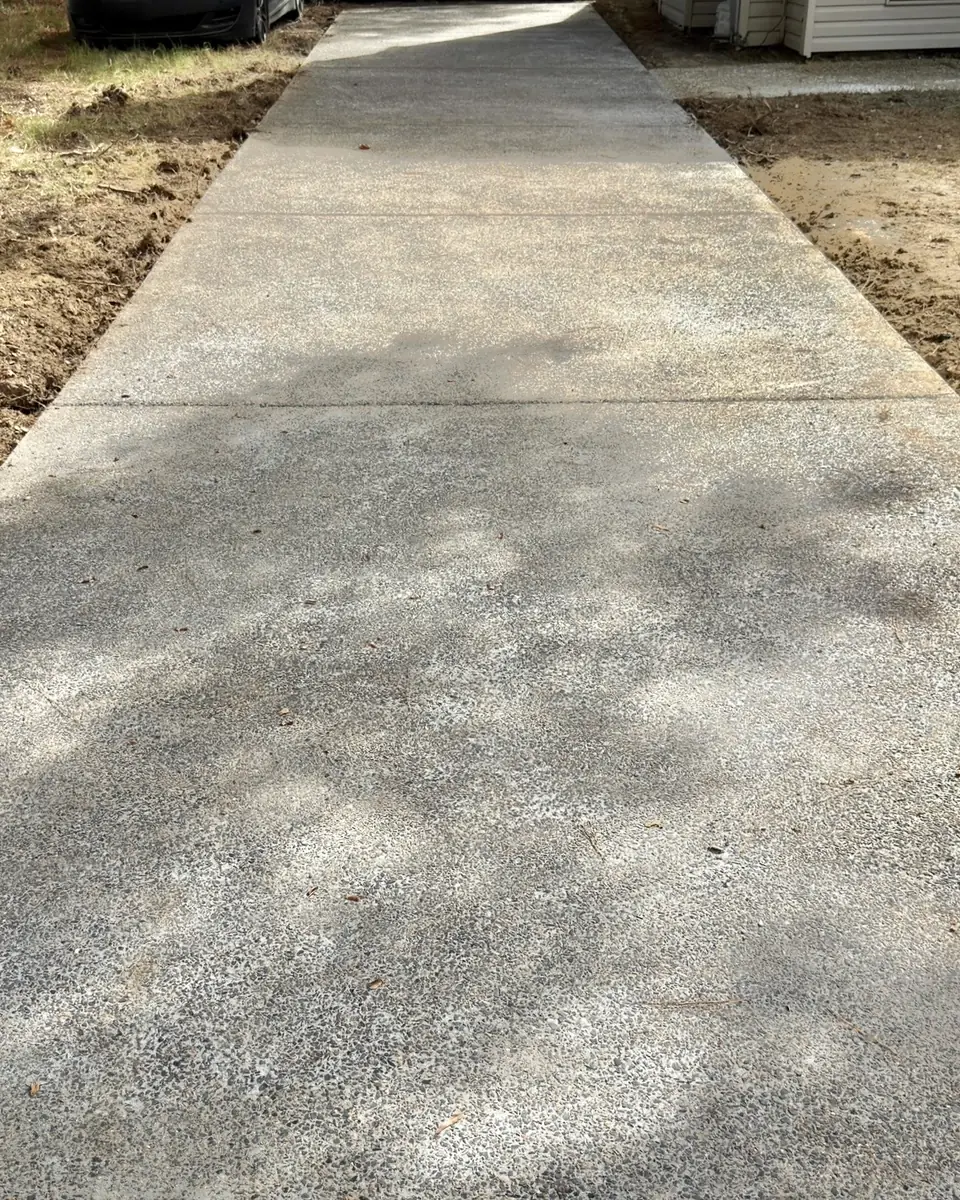
Once a panel has moved, grinding the edge or patching the crack is a short-term fix. Replacing the section on a rebuilt base is what keeps it level.
Signs it's time to replace
Replace a section, rather than patch it, when you see:
- Panel edges raised more than about half an inch (a common trip-hazard threshold)
- Cracks wide enough to catch a heel or grow weeds
- Crumbling or flaking surface
- Water pooling on the walk or running toward the house
- Steps that rock, have cracked treads or uneven risers
Front steps
Concrete steps take more care than flat work: every riser needs to be the same height and every tread the same depth, or people trip. We form and pour steps to consistent dimensions, with a non-slip finish, and can tie them into a new walk in the same job.
If a railing needs to come off for the work, let us know when you send photos so it's included in the price.
What sidewalk work costs in Memphis
Most sidewalk jobs are priced by the section. These typical ranges help you budget before you send photos.
| New sidewalk or walkway, installed | $6–$11 per sq ft |
|---|---|
| Removing old panels first | +$1–$2 per sq ft |
| Typical walk, 4 ft wide × 30 ft (120 sq ft), tear-out and replace | $900–$1,600 |
| Front steps | priced per job from photos |
What moves the price
- Number of panels or total length
- Removing and hauling the old concrete
- Root cutting where trees lifted the walk
- Steps: number of risers and landing size
- Matching an existing finish
- Work in the city right-of-way, which may need a permit