Why retaining walls fail
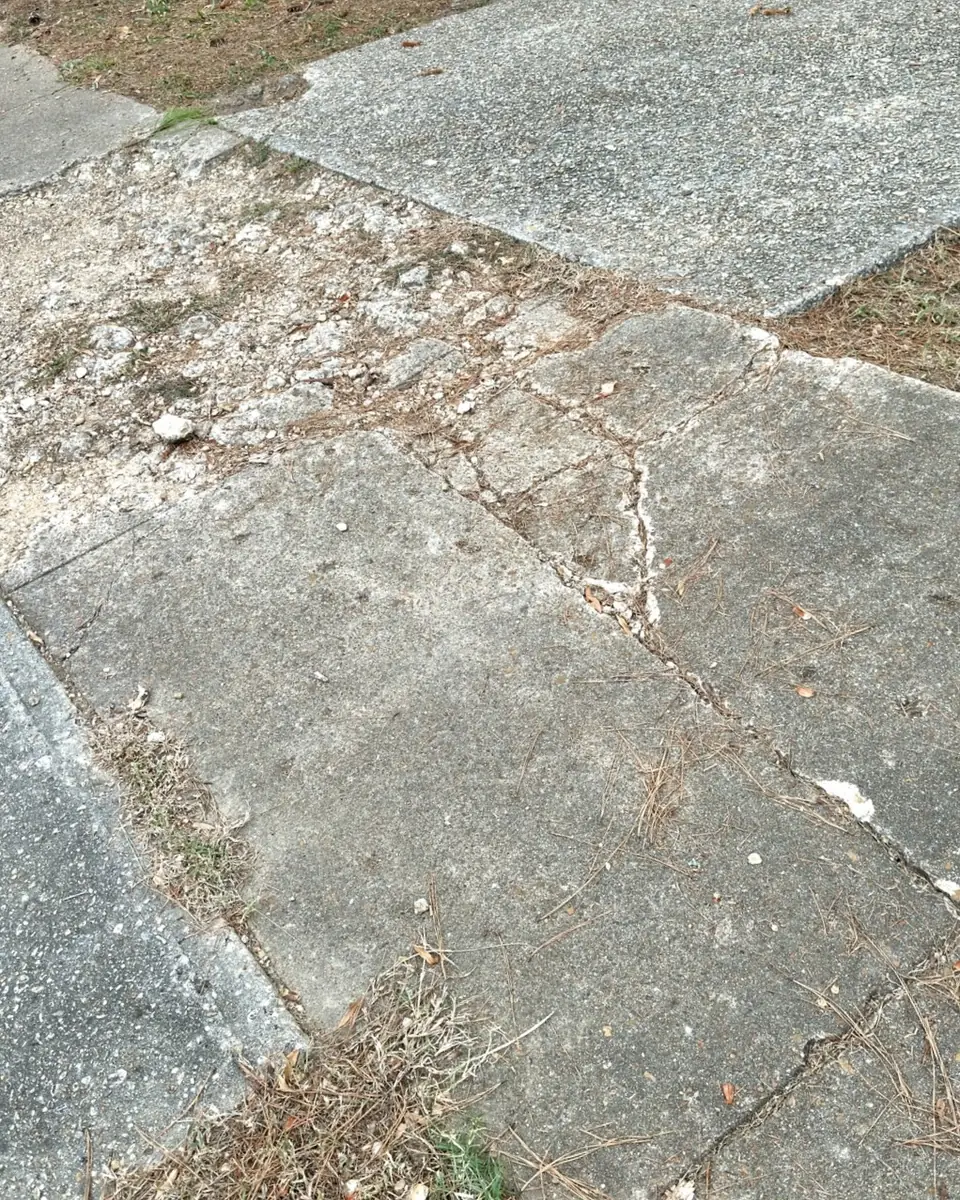
Most failed walls weren't overloaded by soil; they were pushed over by water. When rain soaks the ground behind a wall and has nowhere to go, the pressure builds until the wall leans, bulges or cracks. Memphis clay holds water and swells, which makes that pressure worse.
That's why the part of the wall you don't see matters most: a compacted base below grade, gravel backfill behind the block and a drain pipe that carries water out.
Block or poured concrete?
Both work well when built right. The choice depends on height, look and budget:
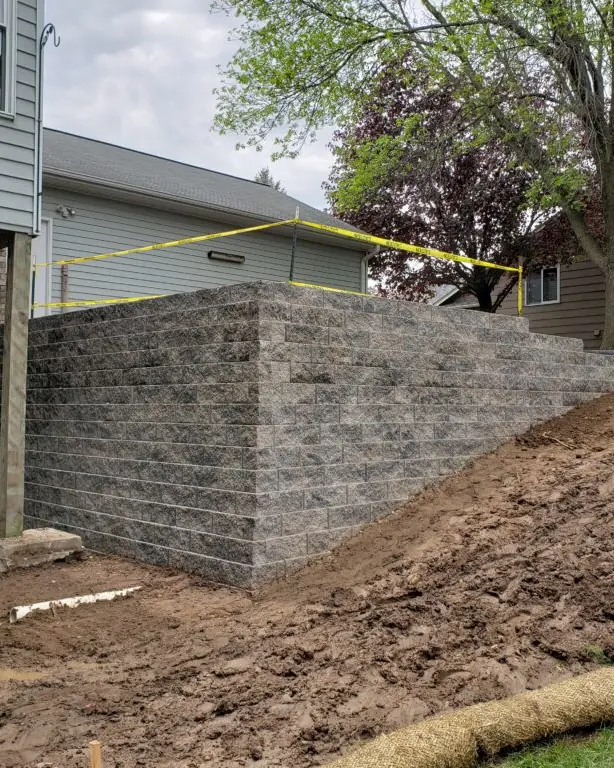
- Segmental block: interlocking units, a finished look, good for most residential walls
- Poured concrete: very strong, a clean modern face, common for taller or structural walls
- Taller walls often need geogrid reinforcement and an engineer's design
- Steps and curves can be built into either type
How we build a retaining wall
We excavate for the base, compact it and set the first course below grade so the wall can't slide. As the wall goes up we backfill with drainage gravel, lay perforated drain pipe at the bottom and add reinforcement where the height calls for it. Excess soil goes out in our own dump trucks.
If the slope is causing problems near your foundation or a neighbor's property line, tell us when you send photos so we can plan for it.
What a retaining wall costs in Memphis
Retaining walls are priced by the face of the wall (length × height). These typical Memphis-area ranges help you budget.
| Segmental block wall | $19–$36 per face sq ft |
|---|---|
| Poured concrete wall | $27–$40 per face sq ft |
| Typical 30 ft × 3 ft block wall (90 face sq ft) | $1,700–$3,200 |
What moves the price
- Length and height of the wall
- Block or poured concrete
- Drainage and backfill needed
- Reinforcement for taller walls
- Excavation and hauling off extra soil
- Access for equipment